Sunday, November 15, 2009

Pay up


It doesn't take much to see that newspapers are struggling to stay afloat, as are many institutions, in this downturning economy. In their article, The Reconstruction of American Journalism, Leonard Downie Jr. and Michael Shudson discuss just how problematic this is for newspaper circulation and what publishers are trying to do to stay competitive.

One thing that stands out to me about Downie Jr. and Shudson's article is their mentioning of newspapers seeking payment for some of the news they put online. Because of the digital news movement, many newspapers have had to start putting out an online version, and because they are losing readership for their print versions, they need new ways to make money, hence, subscriptions to their online versions. I have already started to see this take effect. Many online versions of newspapers that I have seen, while not outright forcing readers to subscribe for their news, have started charging readers to view their archives. If print news becomes obsolete, I see a few pros and cons with this. While, people do need their news, what's to stop them from simply watching their 5 o'clock local news or news channels like CNN and MSNBC?

Although, Downie Jr. and Shudson do mention that not all newspapers are at risk. Local newspapers are still maintaining some sort of readership because of the stories they cover. It's easy to get global news because everyone is reporting on it. However, with local news, if there is no source of it such as a local newspaper or website, than it is extremely difficult to obtain. For example, my local newspaper, The News Herald, is doing quite well. There is virtually no competition and without it, community members would not be able to get a lot of local information.

Saturday, November 14, 2009

The Three Muskateers of digital journalism


Pierre Levy discusses three main components in his view of the changing world of journalism and its transition to the realm of cyberspace: listening, real-time democracy and community.

I don't think I can pick out just one of these aspects as the most important, rather, they all coincide with one another and allow each other to exist. Take for example "listening." According to Levy, listening "expresses problems, assumes a position and formulates arguments based on opinions." A journalist will LISTEN to the problems of the COMMUNITY and, within his or her article, will insight REAL-TIME DEMOCRACY in order to address said problem.

While the listening and community components can exist without the help of cyberspace, real-time democracy is difficult to garner without the use of something as high-speed as the Internet. This is what makes digital journalism unique. With the Internet and such things as BlackBerry's and other phones with WiFi capabilities, the concept of real-time democracy has never been so accurate. A journalist can have an article published, than, if they need to make any updates or changes, they can instantly do that from their phone or computer, keeping up-to-date with the latest happenings regarding that issue.

All in all, while these three components are found somewhat throughout the legacy system, it took a movement like that of digital journalism to really make these things stand out among other aspects of journalism.

Sunday, November 8, 2009

Ecology

The ecological model of news goes hand-in-hand with the citizen journalism movement. This model encompasses many of the aspects of digital journalism, such as the Internet, blogging and video, and requires outside participation. The reason this model is so cost-effective is because of the new technologies available. A newspaper can run a story on their online version, and as opposed to running another follow-up story the next day or week, the reporter can just go online and update their previous story. This saves publishing companies big dollars because they do not have to keep posting follow-up stories, rather, they can use that space for other stories, ads and so on.

This model require much participation from readers and outside sources. Blogs are the number one way to do this. A story can link to a blog that goes along with that topic and allow readers to get many sides to an issue.

The ecological model is a product of the digital news environment and is very cost-effective in a time where saving money is everything.

Check this out!

Check out my article in this month's emYOU! The Magazine.

Sunday, November 1, 2009

This I Believe About EMU

Listen to my "This I Believe About EMU" essay:

Where do we draw the line?

One of the main concepts emerging from the transition to a digital news environment is the idea of citizen journalism. Citizen journalism, of course, being the members of a community playing a role in the process of, ultimately, spreading news. In his article, The 11 layers of Citizen Journalism, Steve Outing says that "citizen journalism isn't one simple concept that can be applied universally by all news organizations," rather, it is more complex and has many potential variations.

On the whole, citizen journalism is a great concept. Who knows the community better than the residents themselves? Although, there is a responsibility that comes with being a "citizen journalist" and therefore, important to have boundaries for those who decide to contribute to the news. If news organizations that were accepting contributions from citizen contributers simply let those contributions go unedited, there would more than likely be inappropriate or unnecessary content getting published.

Outing's sixth "layer" would be a great way to allow citizens to contribute to the news while still maintaining the journalistic aspect. He suggests creating a news-oriented website where citizens can submit pretty much whatever they want and the site's editor performs modest editing in order to maintain some sort of integrity. It would then be the job of those editors to guide citizen contributers into making submissions worth publishing and educating them about what's useful to the community, eliminating all of the unnecessary "fluff."

With many of these sites aimed at providing news from actual residents of that particular community rather than professional journalists, there are going to be obstacles. This is why it is important for there to be some kind of editor who monitors submissions allowing only for quality contributions.

Tuesday, October 27, 2009

Making the veg pledge


Let me make a disclaimer: I am not here to try and convert anyone or ruffle any feathers. I am a new-found vegetarian (about 5 months) with a new outlook on life and I feel it's important for me to share some of these ideas I have adopted. That is all.

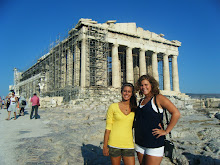
First, becoming a vegetarian was a sort of spur of the moment decision for me. While in Greece this summer, my sister convinced me to go green after seeing countless butcher shops that we literally could not bring our selves to enter because of what we saw. Now, she is 16 and has been living the veggie life for a little over two years, so that experience only affirmed her beliefs. Me on the other hand, I was semi-oblivious to things of that nature, so it was more shocking than anything. A few days later I thought, what the heck, let's try this out and see how it goes. I couldn't be more happy with my choice.

It's true, health reasons did play a semi-important factor in my decision, but probably the single biggest factor contributing to my new lifestyle is that of animal cruelty. Like I said before, I'm not trying to convert anyone, but I would like to share some facts and information --take them for what they're worth.

A lot of people eat meat or fish, but rarely do they know where it comes from.

Take, for example, chicken:

Did you know that chickens are given so many steroids that their bones, specifically their legs, can no longer support them and they break? Or that their organs simply cannot take it anymore and they quit functioning all together? Talk about cruel.

According to GoVeg, "Animals on today's factory farms have no legal protection from cruelty that would be illegal if it were inflicted on dogs or cats: neglect, mutilation, genetic manipulation, and drug regimens that cause chronic pain, transport through all weather extremes, and gruesome and violent slaughter. Yet farmed animals are no less intelligent or capable of feeling pain than are the dogs or cats we cherish as companions."

Just something to think about.

Also check out Kentucky Fried Cruelty.